For Budget And Country

Originally published in the Informanté newspaper on Thursday, 16 March, 2017.


It’s been a year since Minister Calle Schlettwein last presented his Budget Statement to parliament, and what a year it has been. The economy had taken blow after blow – first from the commodity price crash, then the effects of the drought, then from the global economy struggling in light of political upheaval in advanced economies… the list goes on.

It should then be no surprise that the Namibian economy found itself struggling this year. By now, the estimate for 2016’s growth has dropped to only 1%, with growth for 2017 being revised downwards to 2.5%. As a result, Namibia found itself not only facing a slowing economy, but with sliding confidence, also a lack of liquidity. It is in this climate that Minister Schlettwein had to prepare and present his Budget Statement for the next year. So let’s take a look at what he presented:


Let’s start at the top, with government revenues. In total, the government expects to receive about N$ 56.4 billion from various sources, down from N$ 57 billion last year (later reduced to N$ 51.5 billion by mid-year), reflecting Namibia’s difficult situation. N$ 53.3 billion will be from taxes, with N$ 19.2 billion from income taxes – as paid by us every year, and paid by the various companies operating in Namibia. Another N$ 34.1 billion is collected via indirect taxes, like VAT, that you pay when purchasing products or importing products, and transfer duties and property taxes. Then an additional N$ 2.6 billion is raised from other sources, such as dividends and profit shares from government investments and interest of loans and investments, royalties on minerals mined, and fines and administration fees. 

So far, so good. It seems quite prudent, given the state of the economy, and it seems the government is not making the mistake of over-estimating its revenues again, and having to adjust it as they did during last year. So, let us take a look at the expenditure now. Minister Schlettwein’s budget indicates that the government intends to spend N$ 62.5 billion this year. How is this allocated?

As usual, the biggest expense is the N$ 12.0 billion is budgeted for Basic Education. It has been noted that education is the greatest equaliser, and the Namibian government is certainly striving toward it, as government spending on education dwarfs other spending by a significant amount. In fact, Namibia is one of only three countries in the world where education is the top spending priority for government. An additional N$ 3.1 billion is budgeted for Higher Education, Training and Innovation.

Health and Social Services receive N$ 6.4 billion in the budget, and N$ 3.3 billion goes to the Ministry of Poverty Eradication and Social Welfare.  The budget increases the old age pension grant to N$ 1 200 per month, allowing our oldest and most vulnerable of citizens to be placed above the national poverty line. The Ministry of Defense and the Ministry of Safety and Security receive N$ 5.6 billion and N$ 5.0 billion respectively. Together, the abovementioned ministries receive more than 50% of the budget. 

The rest of the ministries are funded by the remainder, as well as several infrastructure development programme, which inter alia include the rehabilitation of the national railway, the on-going expansion of the Port of Walvis Bay, several national roads water and storage infrastructure, the Mass Land Serving Programme and increased funding to the Public Financial Institutions for private sector support and SME development.

As you may have noticed, our government expenditures exceed our revenue – this is what is called our budget deficit. This year, however, it only amounts to 3.6% of GDP, in contrast to the 6.3% of last year. This is due to the fiscal consolidation stance taken by the Ministry of Finance to maintain our macroeconomic stability and sovereign credit rating of our bonds. As a result of the prudent budgeting, only N$ 6.1 billion worth of debt funding will have to be raised by government this year. 

This was achieved by reducing unproductive capital spend and non-core recurrent spending, while refocusing expenditures to national development priorities. This enabled government to cap our national debt at 42%, which otherwise would have ballooned to 46%, and put pressure on our finances via debt servicing costs, as well as jeopardised our credit rating, which was already downgraded to outlook negative last year. 

With the economy just starting to rebound, and only expected to recover to 2.5%, policies to improve domestic resilience, economic and market diversification, regional integration and national competitiveness are of primary importance for Namibia, especially in the light of several large completion projects that has reduced our investment rates to more realistic levels. 

The coming year will be an unconventional one. In contrast to the previous decades, the geopolitical shifts towards protectionist policies and away from multilateralism and globalization could slow global growth and trade. Namibia’s inflation has just reached new highs, while our currency has strengthened again after weakening last year. This indicates that we might experience trade problems going forward, especially if the commodity price recovery does not continue as envisaged.  

This budget, at least, should give some reassurance that the government is keeping its eye on the ball, and positioning itself against adverse conditions, while simultaneously attempting to put the country on the right footing for rapid growth should the opportunity present itself. Still, this quick summary is no replacement for your own – every citizen should avail themselves of the documents as presented on the Ministry of Finance website, and make their own assessment. It is our duty to keep the government accountable and transparent. Namibia expects every man and woman to do his/her duty.

The Empress

Originally published in the Informanté newspaper on Thursday, 9 March, 2017.

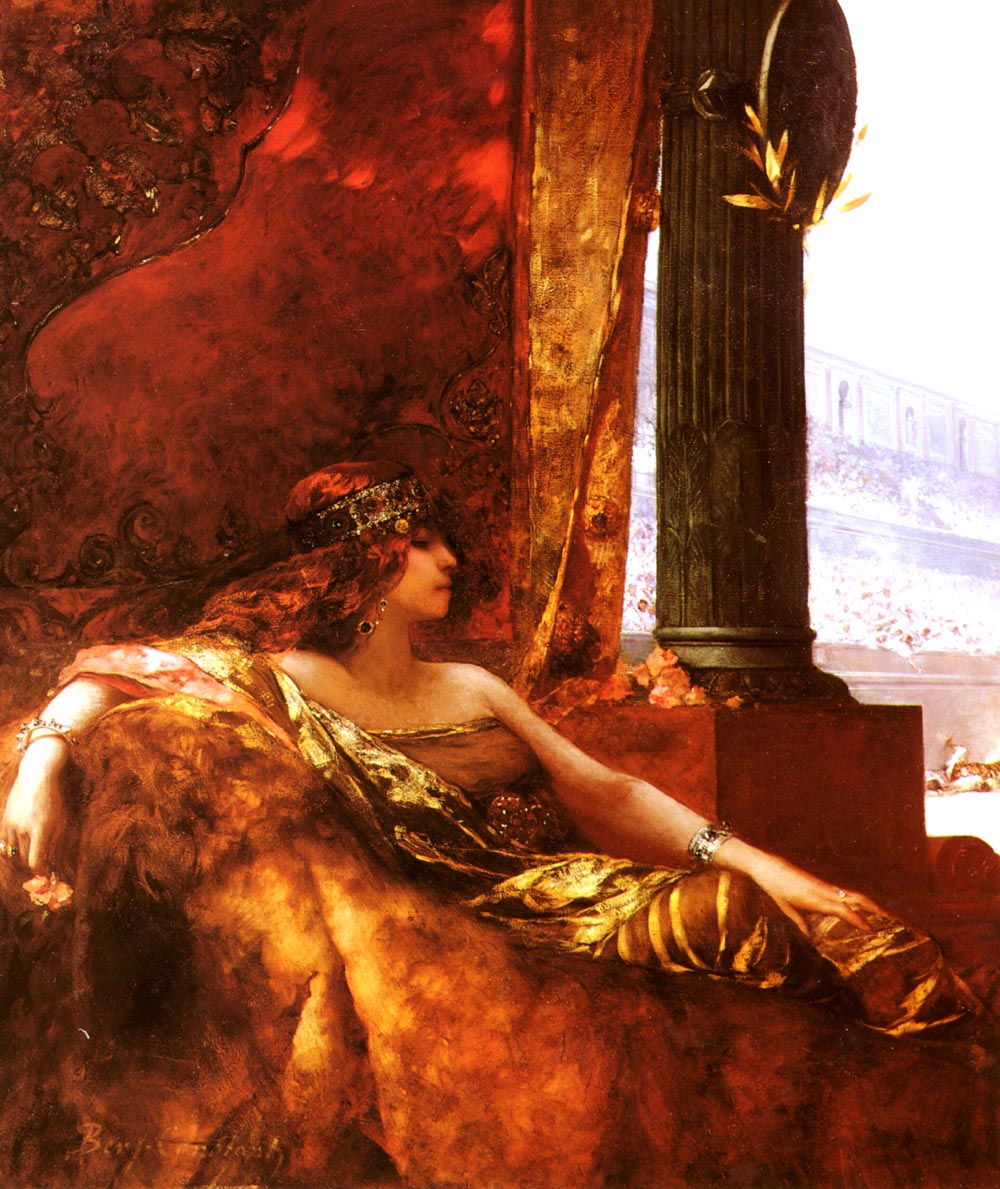
In the year 500 CE, a woman was born. Her name was Theodora. History has forgotten the place, with claims being made for Cyprus and Syria, but that is not important. She was the daughter of Acacius, a bear trainer in the hippodrome (or colosseum) in Constantinople (today knowns as Istanbul). At the age of four, however, her father died, and her mother took her and her sisters to the hippodrome to work.

Thus, at the age of 5, she became an actress, a mime, a dancer, an artist, a comedienne and a prostitute. To be an ‘actress’ in those days was not a savoury occupation, but she performed well. By the age of 14, she had her first child. It is said that her performances at the hippodrome were close to the extremes of modern burlesque, and her salacious portrayal of Leda and the Swan brought her many admirers. 

At age 16, she became the mistress of Hecebolus, and accompanied him to his post as governor of Libya at the age of 18. When they broke up, she started travelling back to Constantinople, and at Alexandria in Egypt, she converted to Christianity. From there, she continued onwards, first to Antioch in Syria, and reaching Constantinople in 522 CE. She gave up her previous lifestyle, and became a wool spinner in a house near the palace. 

Given her beauty and wit, it should be no surprise that she drew the attention of a young Justinian. Justinian, son of a pig farmer, had moved to Constantinople at age 11 after being adopted by his uncle Justin, a member of the Royal Guard. But 4 years before, Justin had been appointed Emperor of the Roman Empire after the previous emperor had died without an heir.  Justinian was quite taken with Theodora, but the law forbid anyone of high position in the Empire from marrying an actress, even if she was a former one.

Justin’s wife, the Empress Euphemia, who ordinary did not refuse Justinian anything, was dead set against this marriage. But in 525 CE, she died, and Justinian got his uncle Justin to repeal the law, and he married Theodora. Two years later, the Emperor Justin I died as well, and Emperor Justinian I and Empress Theodora was crowned. 

Theodora shared in Justinian’s plan and political strategies, and he referred to her as his ‘partner in his deliberations.’ Theodora had her own court, entourage and imperial seal. In 532 CE, however, she showed her mettle. During the Nika riots, when opposing factions had proclaimed a new emperor, Justinian was fearing for his life, and preparing to flee. While discussing this at their government council, Theodora interrupted them, and said, 

“My lords, the present occasion is too serious to allow me to follow the convention that a woman should not speak in a man’s council. Those whose interests are threatened by extreme danger should think only of the wisest course of action, not of conventions. In my opinion, flight is not the right course, even if it should bring us to safety. It is impossible for a person, having been born into this world, not to die; but for one who has reigned it is intolerable to be a fugitive. May I never be deprived of this purple robe, and may I never see the day when those who meet me do not call me empress. If you wish to save yourself, my lord, there is no difficulty. We are rich; over there is the sea, and yonder are the ships. Yet reflect for a moment whether, when you have once escaped to a place of security, you would not gladly exchange such safety for death. As for me, I agree with the adage that the royal purple is the noblest shroud.”

Her speech convinced Justinian to make a stand, and he attacked the hippodrome, where the rioters had congregated, killing all 30 000 of them. Justinian never forgot that it was Theodora who saved his throne. Afterwards, they rebuilt Constantinople, which had burned in the riots. One result of this was the Hagia Sophia, one of the architectural wonders of the world. They carefully supervised the magistrates, to reduce corruption. But Theodora did not stop there.

Justinian recodified Roman law, into the Corpus Juris Civilis, and Theodora took the time to pass much needed reform. She passed laws to increase the rights of women, prohibited forced prostitution, she closed brothels and made pimping illegal. She expanded the rights of women in divorce and property ownership, and instituted the death penalty for rape. She gave mother guardianship rights over their children, and forbade the killing of wives who committed adultery. 

But on 28 June 548 CE, Theodora succumbed to cancer. Justinian wept bitterly at her funeral, and after her death, he passed very little effective legislation. She was buried in the Church of the Holy Apostles in Constantinople, and to this day is considered a saint by the Greek Orthodox Church. 

Theodora was but one woman, from very lowly beginning, and yet she achieved so much. In the wake of International Woman’s Day, it is perhaps time that we realise that that same power is inside every woman around us. These Empresses in ordinary clothing looked after farms and children, while their men were off working at the far edges of our country during the contract labour era. 

Even today, they keep the communal farms going, teaching the children, while their husbands are off working wherever they find it. In a country with such reverence for heroes – in a country with a Heroes Acre! – why is it then that these heroes of our country are not venerated with a single monument?

The Gamut of Beauty

Originally published in the Informanté newspaper on Thursday, 2 March, 2017.

“Some people choose to see the ugliness in this world, the disarray. I choose to see the beauty.” Since the dawn of the human race, we have always been captivated by beauty. With the rains washing over Namibia, we all have experienced that graceful bliss that envelops us when we see the effect is has on our thirsty land. 

It should thus be of no surprise that we have always sought to capture beauty in any form possible. In the beginning, all we had rudimentary pigments, and crude tools, but still we tried to capture and record the beauty we saw in the world. With pigments on rock, we captured as much as was possible. Here in Namibia, our busmen paintings, such as the White Lady, provides evidence of this. 

As humanity progressed, our tools and materials became more complex, and we could capture beauty more effectively. As a result, we could not only capture the beauty as it appears, but also as we imagine it to be – we could be creative. We could create art. 

Our first foray into busmen paintings blossomed into a veritable portmanteau of skills with which we could capture the beauty of a moment. From the White Lady, we progressed to Leonardo Da Vinci’s Mona Lisa, and Van Gogh’s The Starry Night. But these forms captured beauty in a two dimensional plane, and sometimes that’s not enough for an artist. In parallel, another form of art developed – sculpture. First done with ceramics, made from clay and developing from pottery, it soon expanded into a form all of its own, with Michelangelo’s David probably the most well-known of these.

Still, these forms could only capture a moment, and too often, beauty last more than a moment. While we had yet to develop the technological sophistication to be up to the task, we harnessed that other master computer we all carry with us – the human brain. We turned more abstract, letting the human intellect and imagination fill in that which we could not capture. We began recording narratives with words, enabling a story to be told. We invented literature, and poetry. 

As we went abstract, we found beauty in even more things. The abstract world of mathematics opened up for us, and as Bertrand Russell said, “Mathematics, rightly viewed, possesses not only truth, but supreme beauty — a beauty cold and austere, like that of sculpture, without appeal to any part of our weaker nature, without the gorgeous trappings of painting or music, yet sublimely pure, and capable of a stern perfection such as only the greatest art can show. The true spirit of delight, the exaltation, the sense of being more than Man, which is the touchstone of the highest excellence, is to be found in mathematics as surely as poetry.”

Being capable of recording the abstract enabled us to record the ineffable – music. By developing musical notation, those sublime notes that touch the heart could now be spread far and wide, and as the centuries progressed, we had more and more instruments to strum the strings of emotion with. Beauty had come to pierce the soul of humanity. 

Lest it be said that we started to rest on our laurels, we continued to progress technologically, and new forms of art opened up to capture the beauty of this world. We used the literary arts to ‘replay,’ as it were, the events recorded, and the theatre opened up to the world. Master of the theatre, William Shakespeare, certainly left his legacy there. And when theatre used music instead of literature as a basis, we got the musical. 

Soon, we could capture beauty perfectly, via a new-fangled invention called the camera, which produced photographs. We had, however, become used to artists enhancing beauty, and when cameras were developed that could film moving pictures, another art form emerged – the movie. But it was not only the visual arts that got an upgrade. Soon, a device emerged that allowed for the visualization of mathematics – the computer. It too, spawned its own form of art, as immortalized in Donald Knuth’s volumes on The Art of Computer Programming.

And so, the great convergence began. Movies were combined with drawing, and animation began, with Walt Disney’s masterpieces sure to be seen by many a child. Drawing combined with literature, and the graphic novel emerged, culminating in the legends of today’s comic books, such as Jack Kirby and Frank Miller. Computer programming and literature combined to produce interactive novels. When they combined with drawing, the video game made its debut.

Today, we are all conversant with capturing beauty. Social media is filled with photographs and videos of people capturing remarkable moments across the world, and sharing them with friends and family. Even as this is occurring, we are discovering new ways to capture the beauty of this world – sculpture is today done via 3D printing and its modelling is instrumental in moving the art of video games beyond a 2D plane on a screen into the 3D virtual reality devices slowly coming into prominence. 

Beauty is all around us, if you just know where to look. Once you choose to see the beauty in this world, you’ll find that you feel spaces opening up inside you, like a building with rooms you’ve never explored. It’s time you started exploring, for there is much to discover yet.